
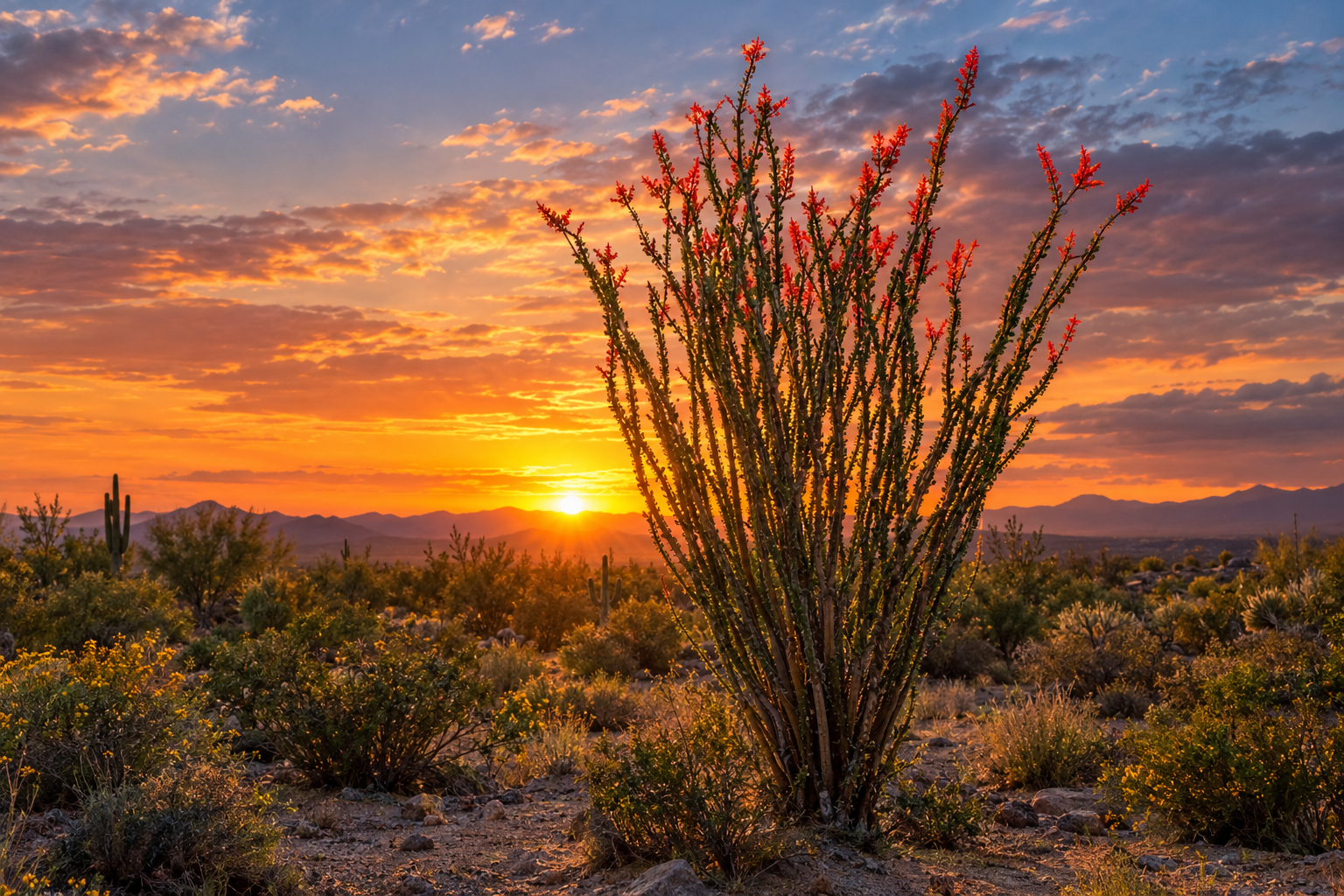
A quick field guide to identifying the dramatic architectural cacti, living compasses, and rain-chasing succulents framing Southern Arizona’s skyline.
The skyline of Southern Arizona is unlike anywhere else on Earth, anchored by dramatic, spiky silhouettes that seem to defy the desert heat. These cacti and succulents are master water conservationists, storing gallons of moisture inside their thick, fleshy stems and waxy leaves during rare desert downpours so they can thrive through months of pure sunshine.
Whether you’re taking a morning walk around your neighborhood or setting out on a local foothill trail, here is your field guide to identifying the essential cacti and succulents growing around your stay!
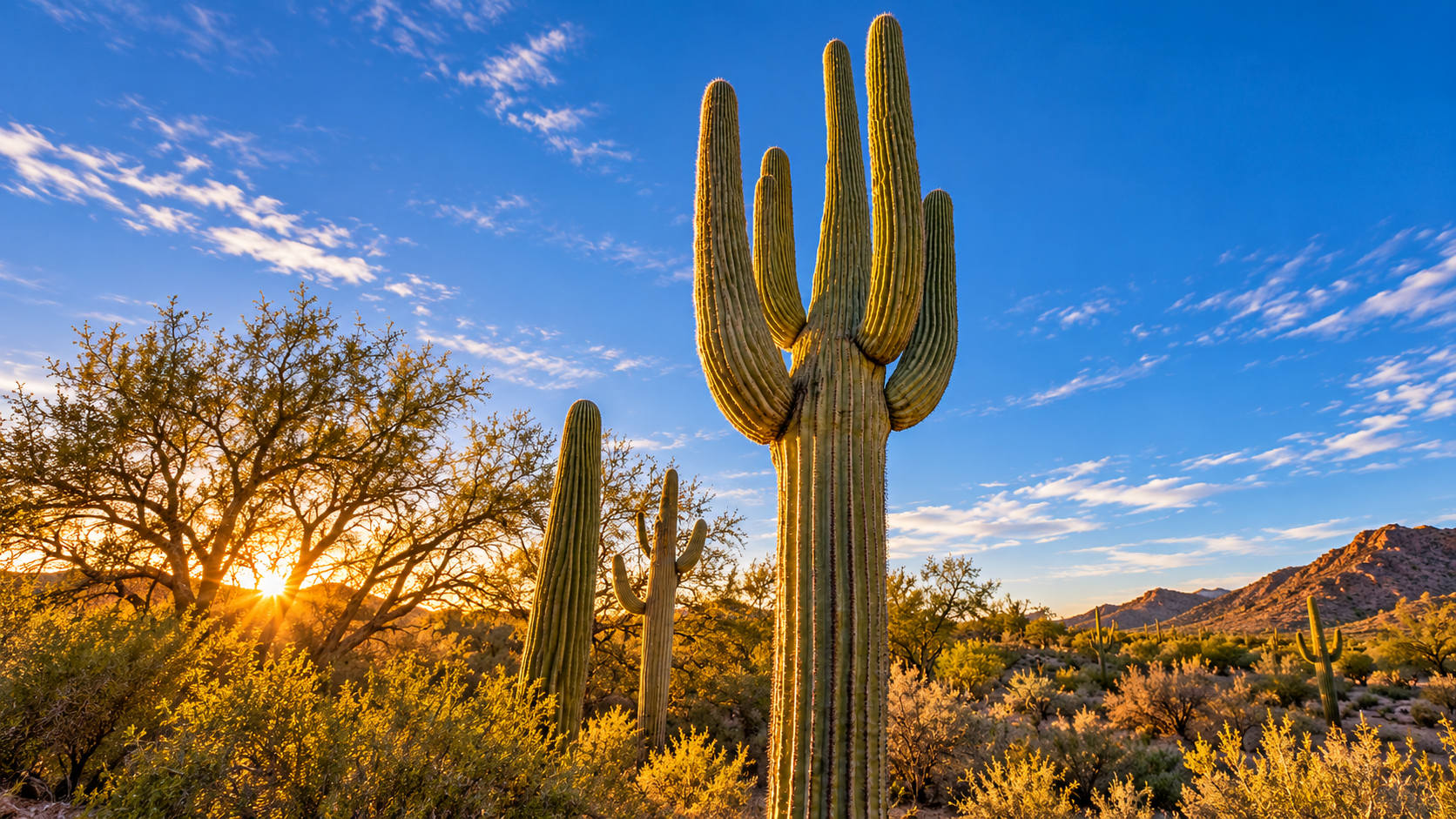
The Saguaro Cactus (Carnegiea gigantea)
Highlights: The undisputed, towering king of the Sonoran Desert and the official state flower of Arizona.
How to Spot It: Massive green columns featuring deep vertical pleats, sharp spine ridges, and classic sweeping arms reaching toward the sky.
Desert Superpower: Saguaros grow at an extraordinarily slow pace—a 10-year-old saguaro might only be two inches tall! They rely on protective "nurse trees" (like Mesquites and Palo Verdes) for shade during their first decades and rarely sprout their iconic first arm until they reach 75 to 100 years of age. A mature saguaro can weigh up to 4,800 pounds when fully saturated after a rain!
Spring Bloom: In late spring (May through June), creamy white, waxy blossoms bloom at the very tips of their branches. Opening under the cool desert night to welcome migratory bats, these blooms close by the following afternoon and eventually give way to bright red, sweet desert fruits.
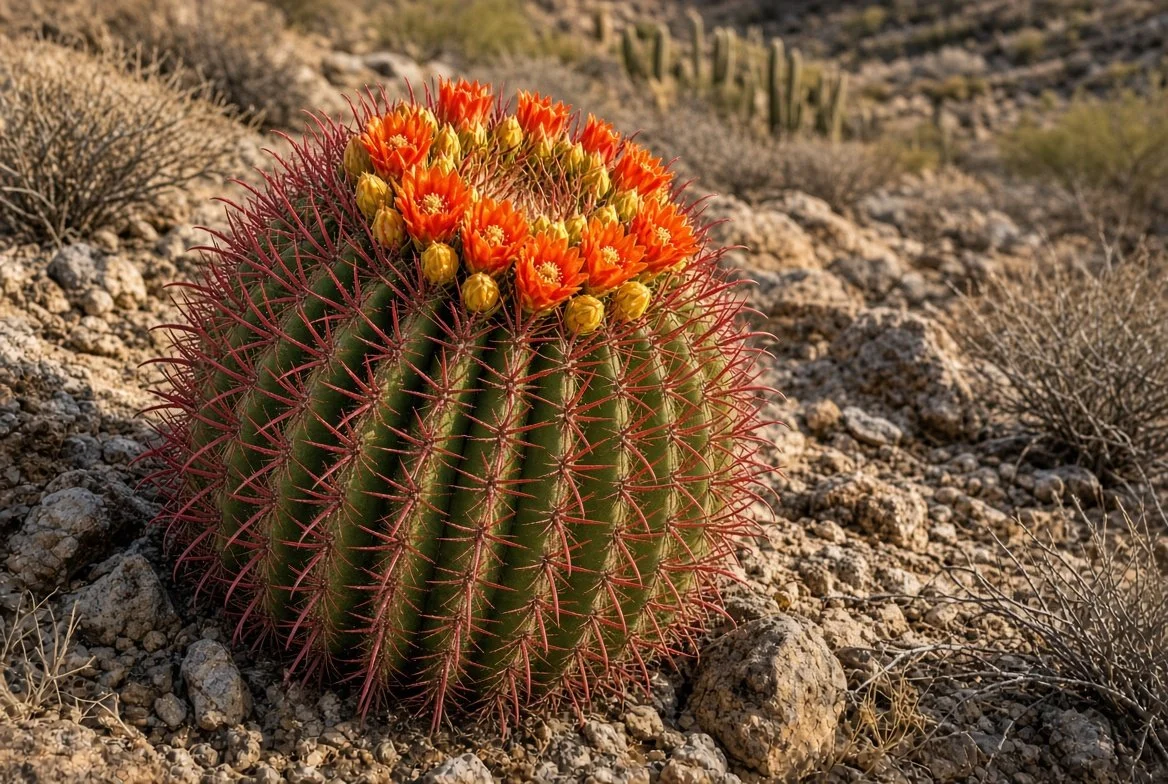
Fishhook Barrel Cactus (Ferocactus wislizeni)
Highlights: The desert’s natural compass, easily recognized by its stout, ribbed cylinder shape and thick, hooked spines.
How to Spot It: Barrel-shaped cacti growing anywhere from two to five feet tall, covered in heavy, ribbed clusters of reddish-brown spines that hook inward at the tip like fishing hooks.
Why It Leans: Local botanists often call this the "Compass Cactus" because mature plants almost always lean perceptibly toward the south or southwest. This precise orientation minimizes direct sun exposure on their growing tips during the hottest hours of the day!
Seasonal Surprise: Following late-summer monsoon rains, a crown of brilliant yellow, pineapple-shaped fruits forms at the very top of the barrel, lingering well into winter to feed local desert wildlife.
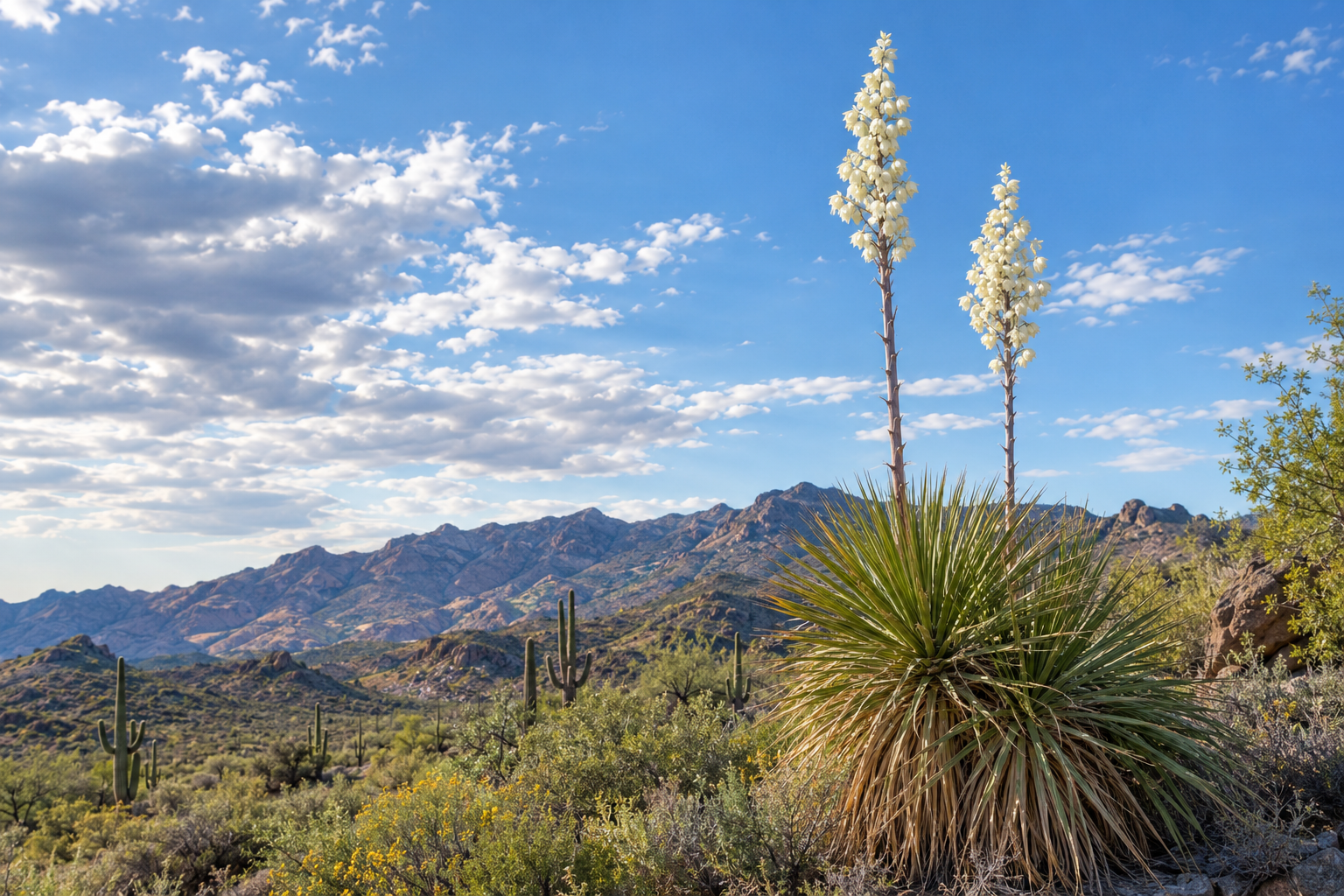
Soaptree Yucca (Yucca elata)
Highlights: Elegant, trunk-forming yuccas with narrow, sword-like leaves that add texture to the desert landscape.
How to Spot It: Tall, branching trunks topped with dense tufts of narrow, flexible leaves edged with fine, curly white thread-like fibers.
Life Cycle Difference: Unlike agaves, yuccas do not die after flowering! They return year after year, producing stunning, tall stalks of creamy white bell-shaped blossoms almost every summer.
Native Heritage: True to their name, indigenous communities pounded the roots of the yucca plant in water to create a natural, sudsy soap used for washing hair, skin, and woven baskets.
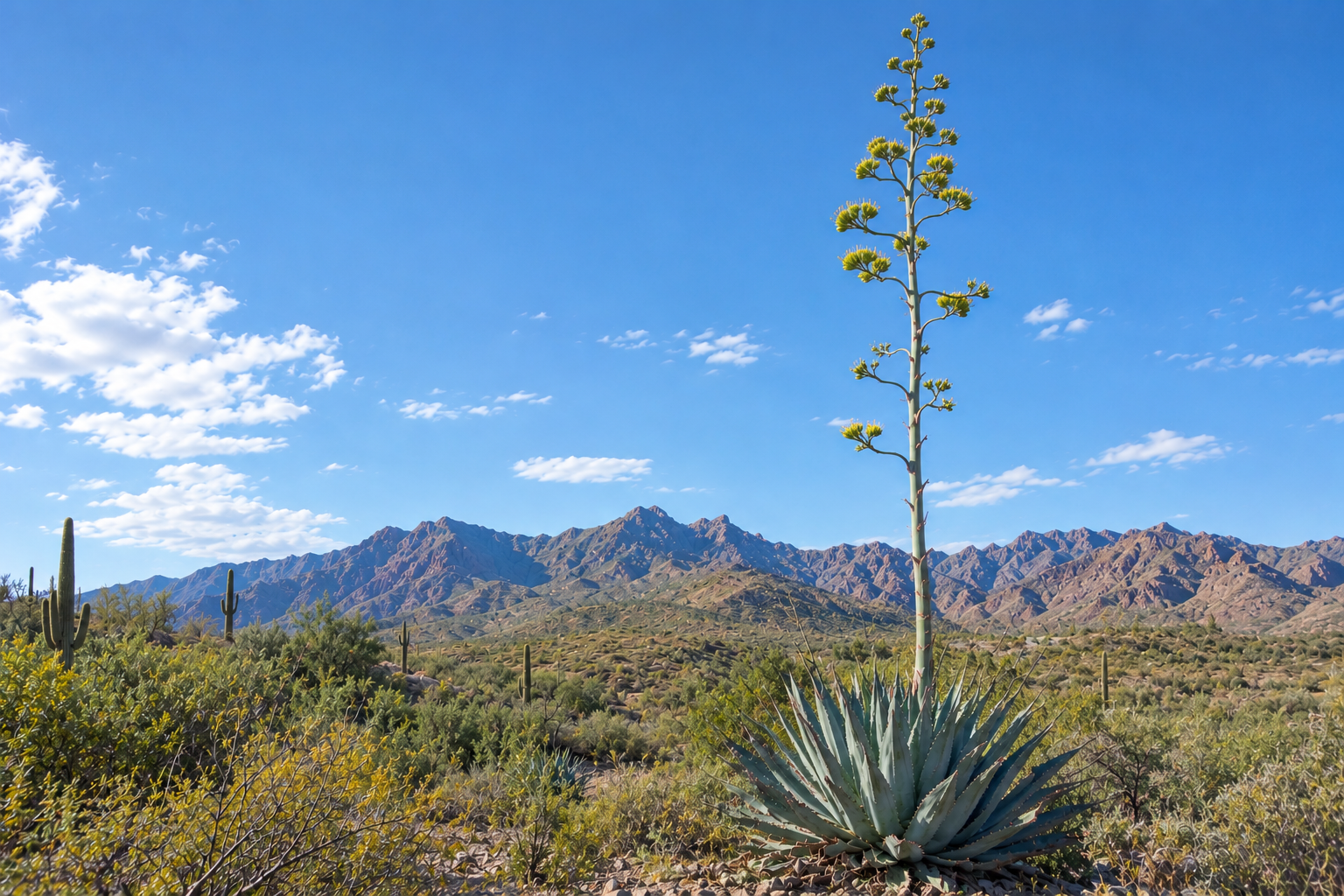
Palmer Agave / "Century Plant" (Agave palmeri)
Highlights: Dramatic, heavy-leafed rosettes known for their long lifespans and towering, candelabra-like blooms.
How to Spot It: Large, blue-green rosettes featuring thick, fleshy leaves lined with sharp side-teeth and tipped with a needle-sharp point.
The "Century" Myth: Despite the nickname, they do not take 100 years to bloom! Plants typically grow for 10 to 30 years, storing up energy until shooting up a massive 15 to 25 foot flower stalk crowned with horizontal, brush-like yellow bloom clusters.
Drought & Fire Defense: Like many water-storing desert succulents, agaves serve as living green firebreaks in desert landscapes because their thick, moisture-packed leaves do not burn easily during dry seasons.
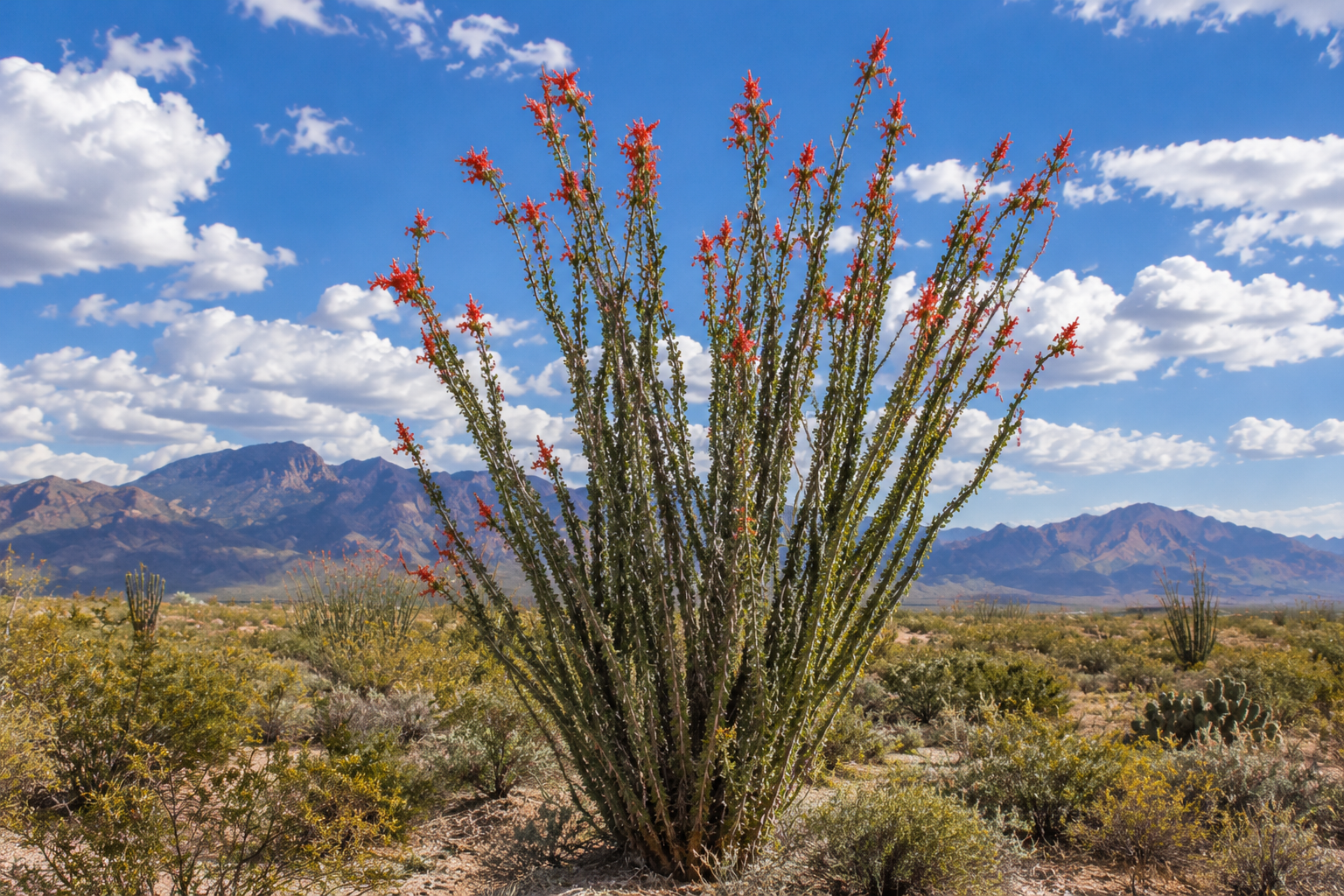
Ocotillo (Fouquieria splendens)
Highlights: Spiky, whip-like branches fanning out from a central base, famous for their sudden rain transformations and impressive vertical growth.
How to Spot It: Easily spotted by their dramatic height, mature Ocotillos shoot anywhere from 12 to over 20 feet into the air! Look for clusters of dozens of stiff, thorny gray wands fanning outward from a central base like a giant desert crown.
The Magic Transformation: Ocotillos are actually leafed succulents rather than true cacti. During dry spells, they drop all their leaves to conserve water, appearing completely dry and dormant. However, within 24 to 48 hours after a desert rainfall, those 20-foot dry thorny sticks sprout vibrant, bright green leaves down their entire length!
Spring Bloom: From late March through May, the very tips of these towering branches burst into fiery clusters of bright crimson-orange, tube-shaped blossoms that draw in migrating hummingbirds.
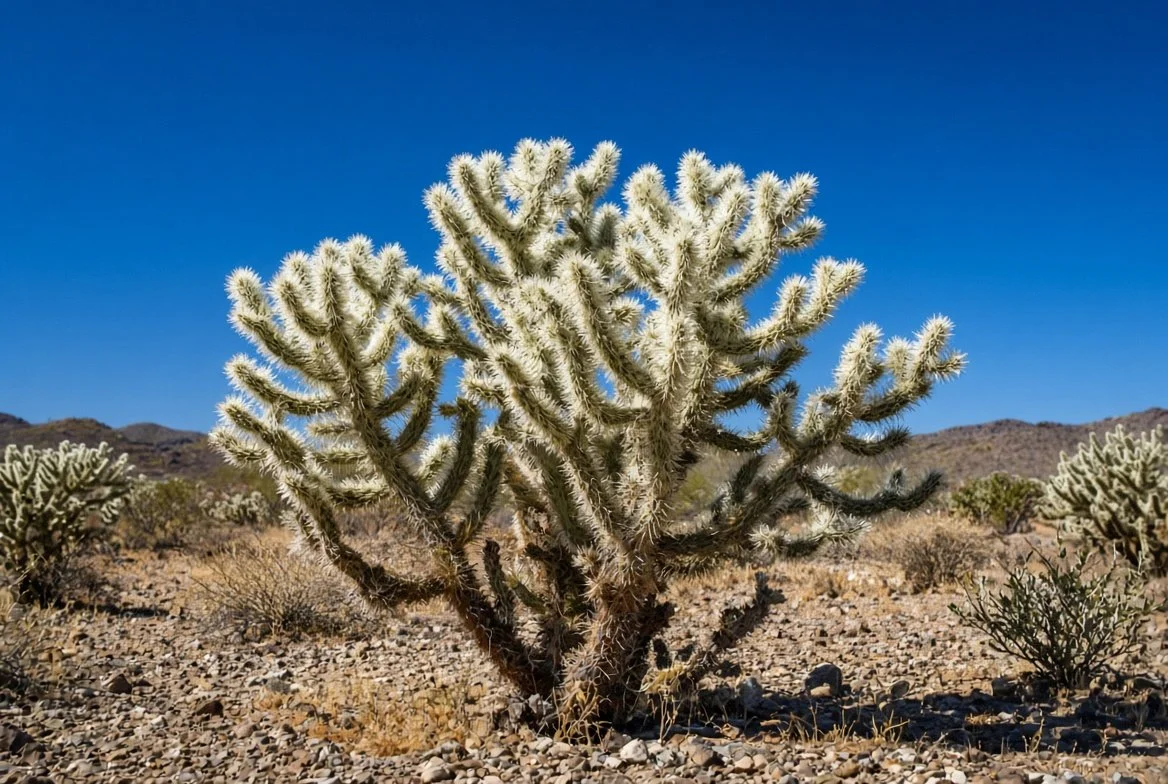
Teddybear & Jumping Cholla (Cylindropuntia bigelovii & fulgida)
Highlights: The desert's most deceptive cactus, looking soft and fuzzy from afar while holding a fierce reputation among hikers.
How to Spot It: Distinct dense clusters of silvery-gold spines that glow brightly when backlit by the desert sun. They feature short, cylindrical jointed segments that break off easily.
The "Jumping" Myth: Do they actually jump? Not quite, but it certainly feels like it! The stem segments disconnect with the slightest brush of a sleeve or shoe. The microscopic barbs on the spines hook into tissue so fast that the joint snaps off the parent plant before you even realize you touched it.
Desert Wildlife Secret: Despite the formidable spines, the Cactus Wren routinely builds its nests deep inside the sharp branches of the Cholla. The barbed needles create an impenetrable fortress that keeps snakes, hawks, and other predators completely out.
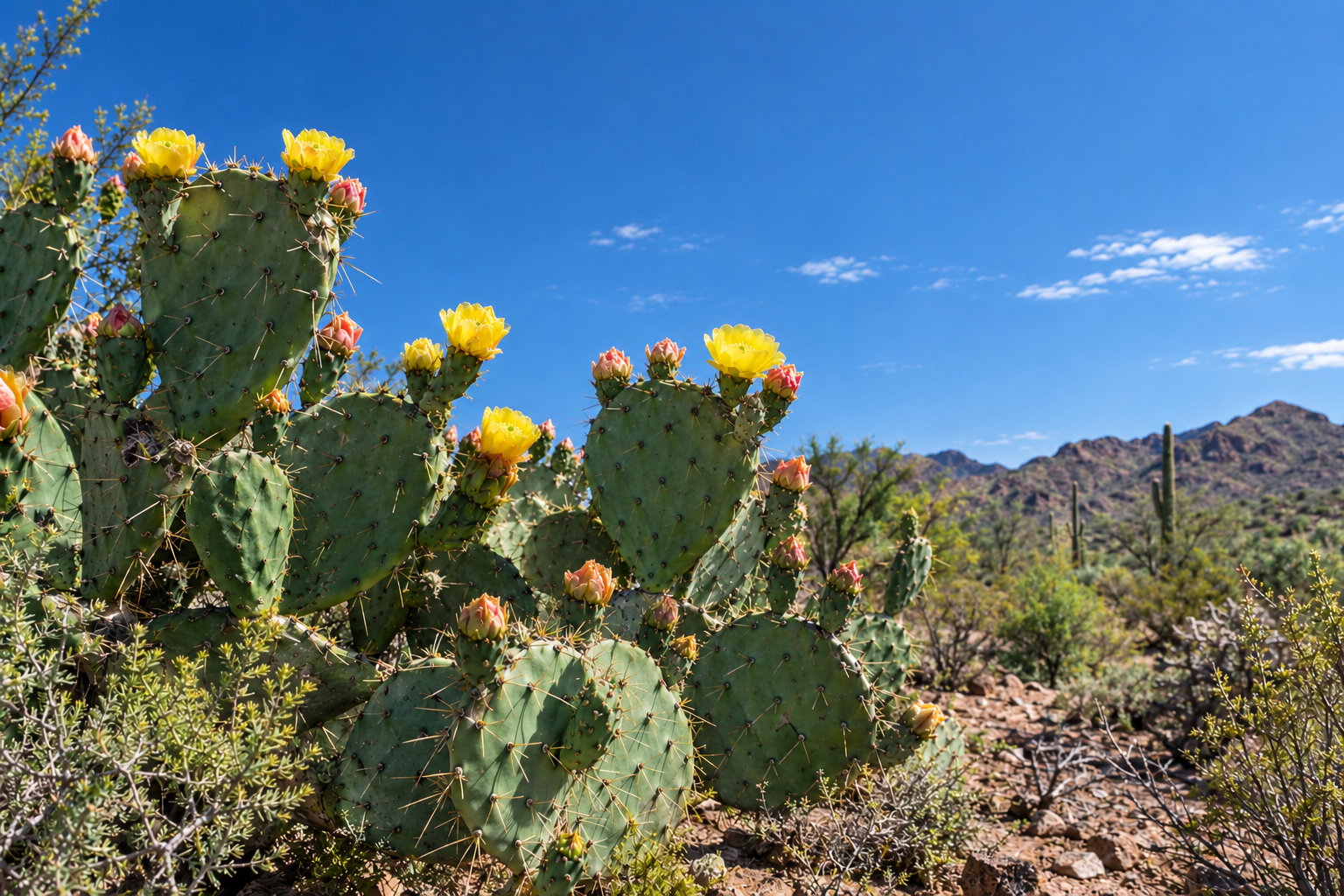
Engelmann Prickly Pear (Opuntia engelmannii)
Highlights: Wide, pad-like cacti that spread into massive thickets, famous for sweet spring fruit and vibrant flowers.
How to Spot It: Flat, oval green pads covered in long pale spines, forming broad bushes close to the ground. In spring, they bloom with vivid yellow flowers that turn orange as the day wears on.
Native Heritage & Culinary Uses: Indigenous communities and desert locals have utilized the Prickly Pear for generations. The tender young green pads (nopalitos) are harvested, cleaned of spines, and cooked into savory dishes. In late summer, the deep purple fruits (tunas) are harvested to make sweet jellies, candies, syrups, and desert margaritas.
Desert Safety & Etiquette for Visitors
Give Chollas Extra Room: Never walk closely past a Cholla cactus. If a segment attaches to a shoe or clothing, use a fine-toothed pocket comb (never bare hands!) to slide under the segment and flick it away.
Keep Your Distance: Cacti needles, especially the tiny, hair-like barbed spines called glochids found on prickly pears, are tricky to remove. Give cacti a wide berth when snapping photos!
Pups on Leash: If you are traveling with furry family members, keep them on a short leash during walks to protect their paws from low-lying cacti segments, burs, and fallen spines.
Leave No Trace: Cacti and succulents are protected under Arizona state law. Enjoy their beauty with your eyes and camera!