
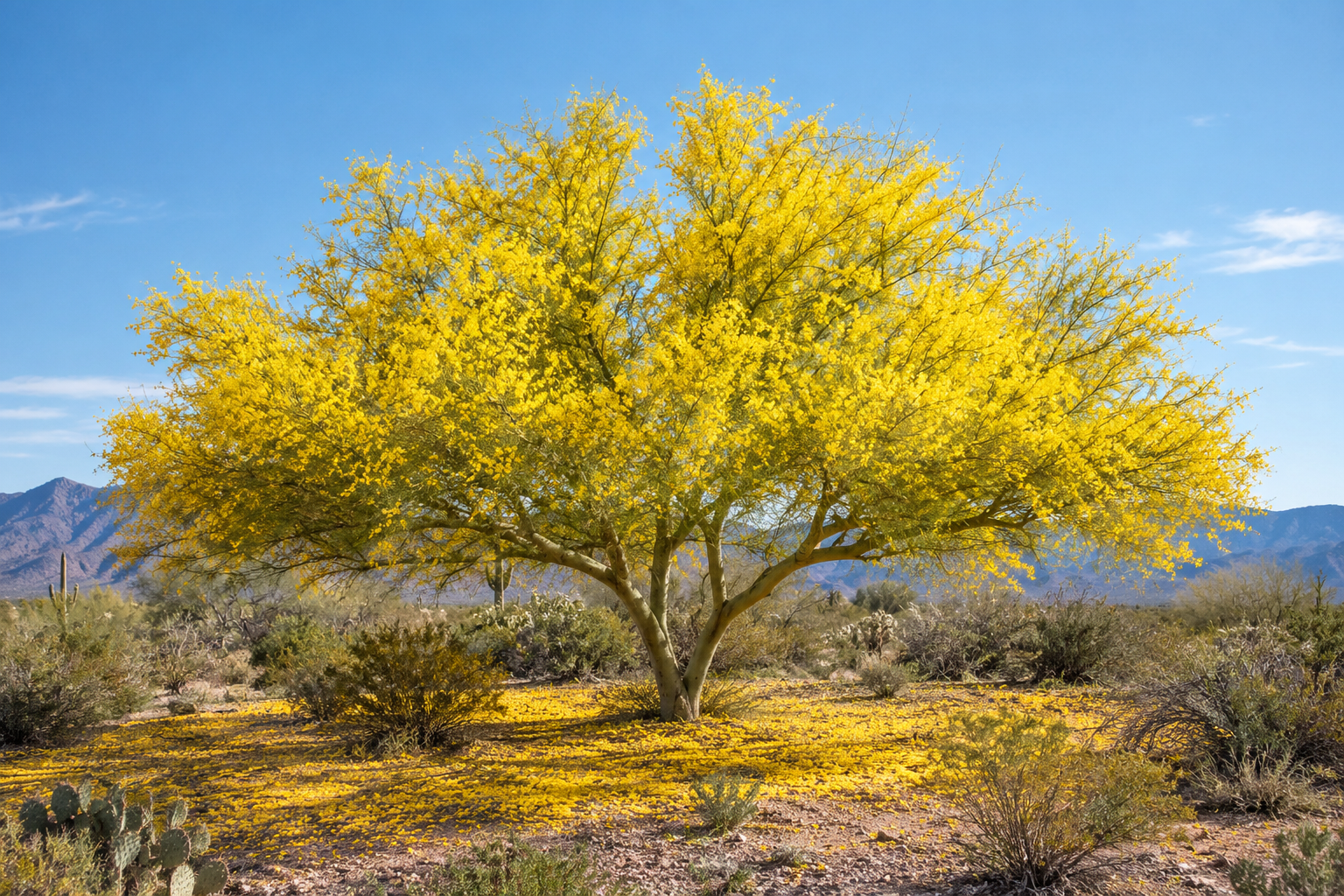
Discover the ancient shade-makers, green-barked marvels, and keystone trees that keep the Sonoran Desert cool and thriving.
When you step outside onto your patio or head out for a morning walk around your Southern Arizona stay, take a moment to look up at the trees framing the desert horizon. Unlike the dense, damp forests found in other parts of the country, Southern Arizona’s native trees are absolute masters of survival.
More than just providing visual beauty, many of these trees act as "nurse plants." Their protective canopies cast vital shade that lowers surface temperatures, creating a micro-climate where young saguaros, delicate wildflowers, and desert wildlife can survive their fragile early years under the blazing sun.
Whether you're lounging in the shade or exploring local trails during your stay, here is your guide to identifying the essential native trees of the Sonoran Desert!
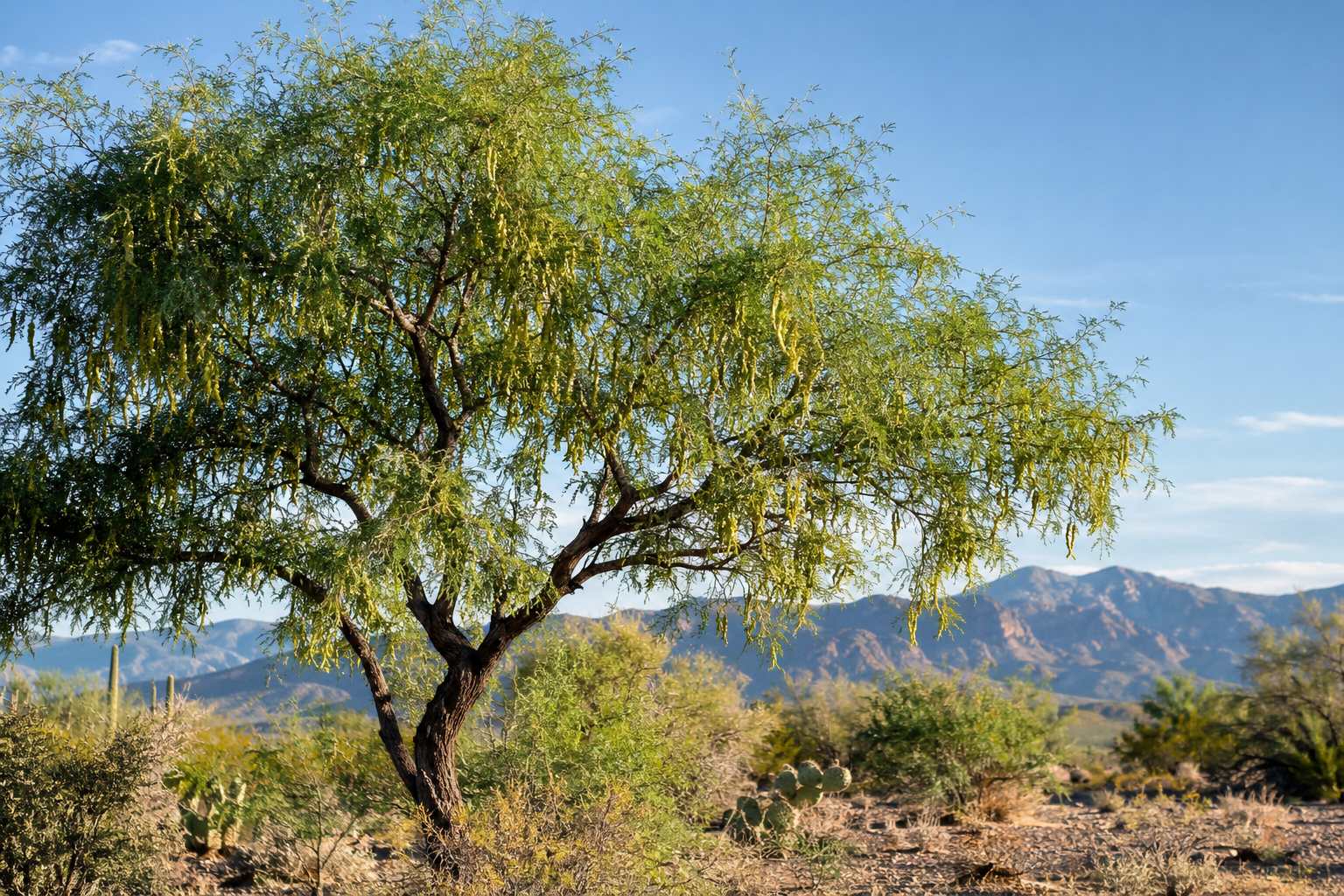
Velvet Mesquite (Prosopis velutina)
Highlights: The quintessential shade tree of Southern Arizona, known for its deep roots, twisting branches, and rich indigenous history.
How to Spot It: Look for deeply furrowed, dark, twisted trunks supporting delicate, fern-like green leaves and sharp thorns on younger branches.
Desert Superpower: To survive months without surface rain, mesquites send down massive taproots, some of the deepest in the plant kingdom, stretching down over 50 feet into underground water tables.
Native Heritage: For generations, native desert cultures harvested the sweet, yellow seed pods of the velvet mesquite, grinding them into a rich, protein-packed, gluten-free flour used for baking, cakes, and rich porridges.
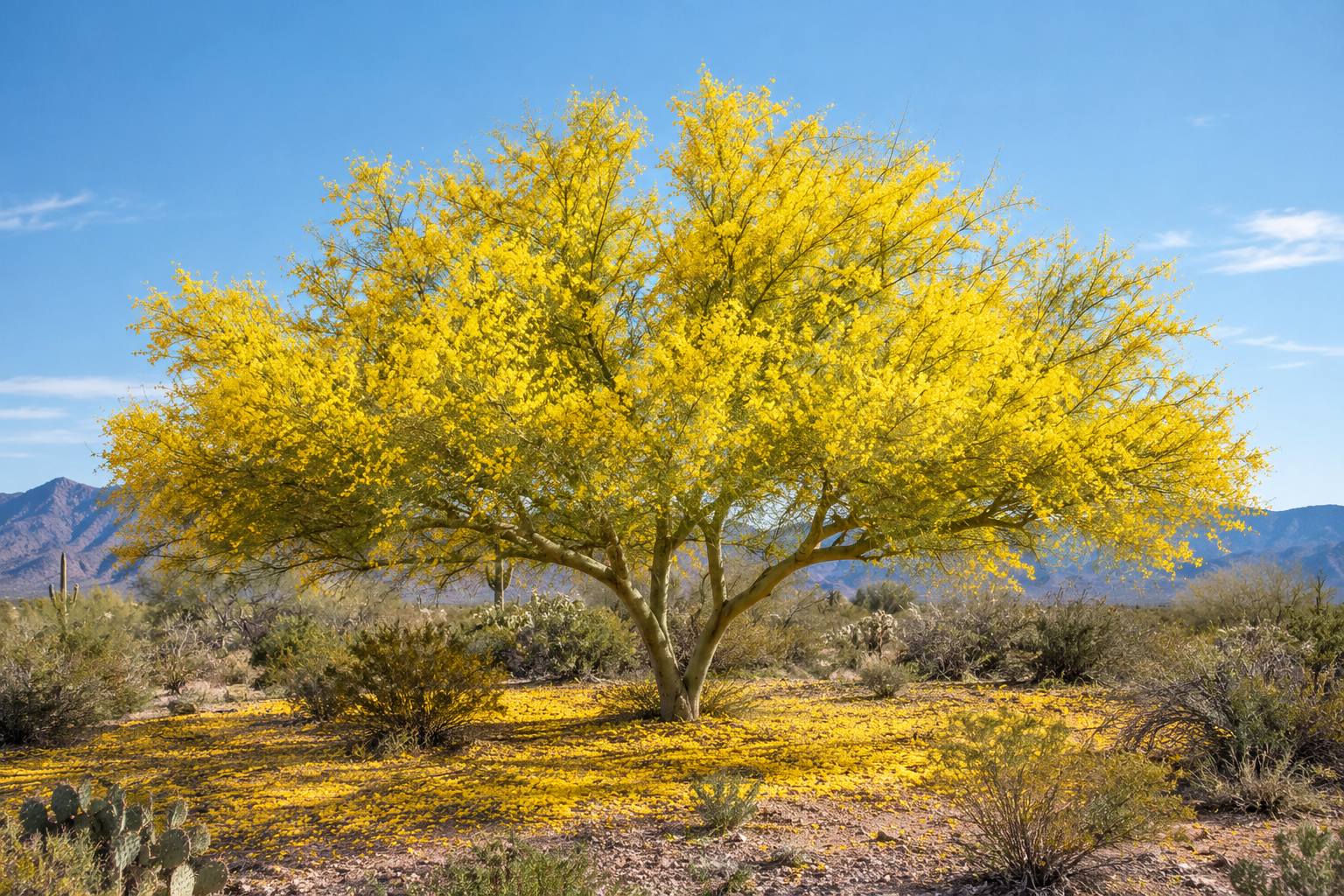
Palo Verde (Parkinsonia microphylla / florida)
Highlights: Arizona’s state tree, famous for its smooth, brilliant green bark and the neon-yellow spring explosion that transforms the desert.
How to Spot It: Instantly recognizable by its striking, smooth green trunk and delicate branching structure. (Fun translation: "Palo Verde" literally means "green stick" in Spanish!)
Desert Superpower: Typical trees lose too much moisture through their leaves in dry desert air. To solve this, the Palo Verde’s green bark contains chlorophyll, allowing the tree to perform photosynthesis directly through its bark even after dropping its leaves during dry spells.
Spring Spectacle: In mid-to-late spring, the entire desert landscape lights up in brilliant neon yellow as Palo Verde trees burst into millions of tiny, fragrant golden blossoms that blanket the washes.
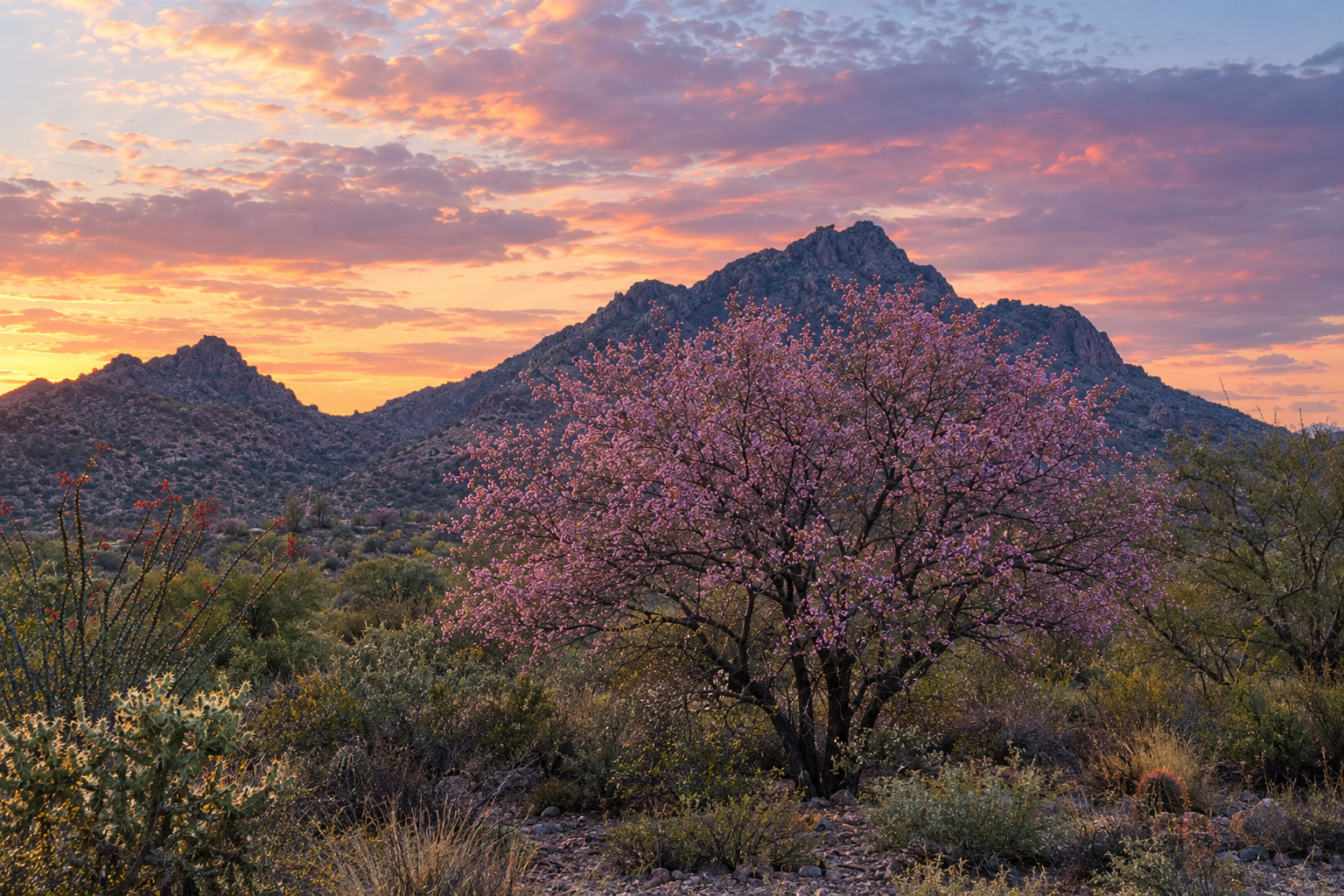
Desert Ironwood (Olneya tesota)
Highlights: An ancient, slow-growing desert giant that can live for centuries and serves as the ultimate "keystone" species of the region.
How to Spot It: Dense, gray-green foliage with extremely heavy, hard wood. In late spring, it produces breathtaking, pea-like clusters of lavender and soft purple blossoms.
Ecosystem Hero: Biologists call the Desert Ironwood a "keystone species" because its dense canopy and deep root systems support hundreds of other desert plants, nesting birds, and reptiles that rely entirely on its micro-habitat to survive extreme summer heat and winter freezes.
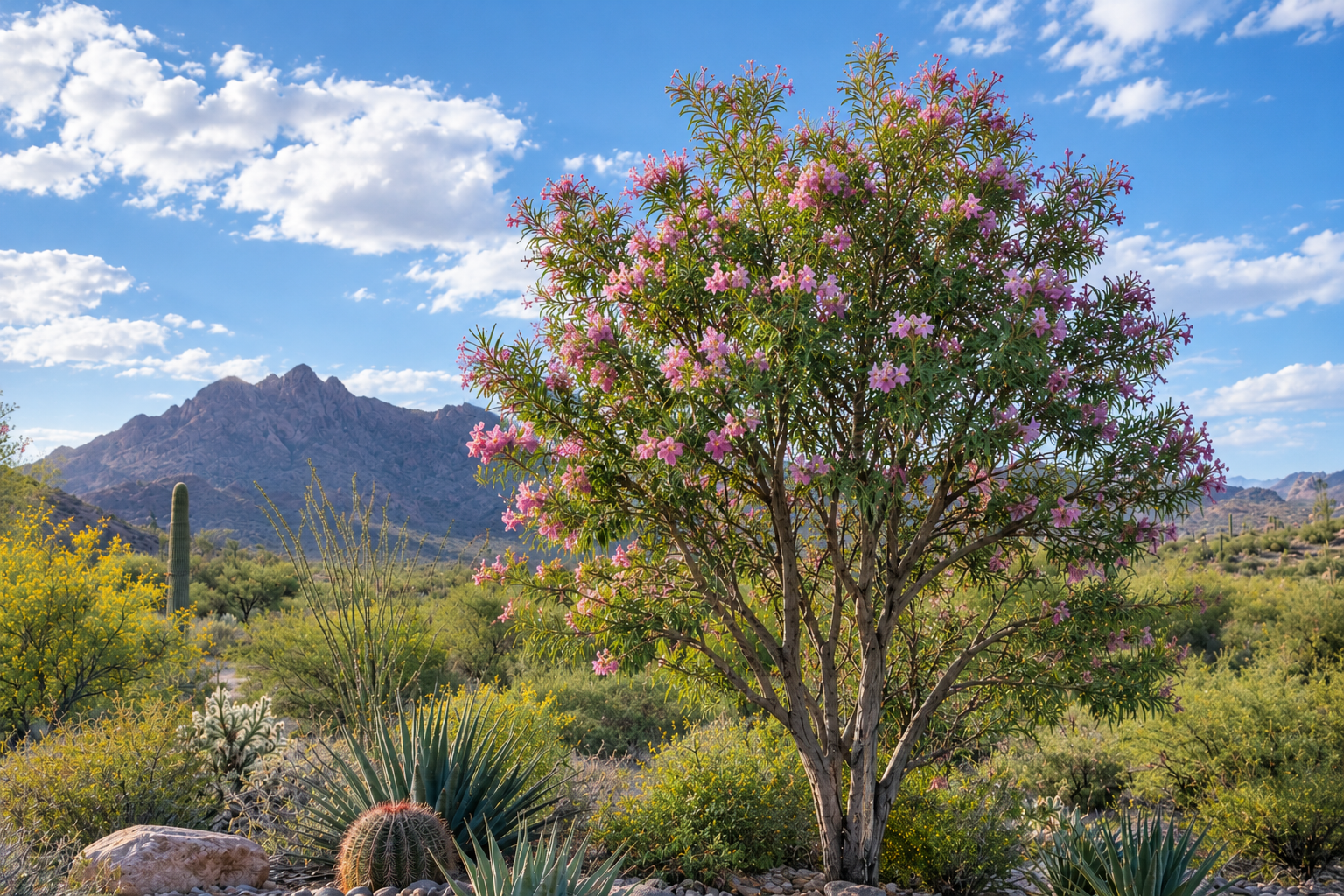
Desert Willow (Chilopsis linearis)
Highlights: Elegant, weeping foliage paired with showy, orchid-like flowers that attract clouds of pollinators.
How to Spot It: Look for slender, willow-like weeping leaves accompanied by gorgeous, trumpet-shaped flowers featuring ruffled edges in shades of pink, rich lavender, and white with purple throats.
Wildlife Favorite: Despite its name, it isn't actually a true willow (it’s part of the trumpet-vine family!). Hummingbirds, native carpenter bees, and butterflies flock to these trees for nectar from late spring well into autumn.