
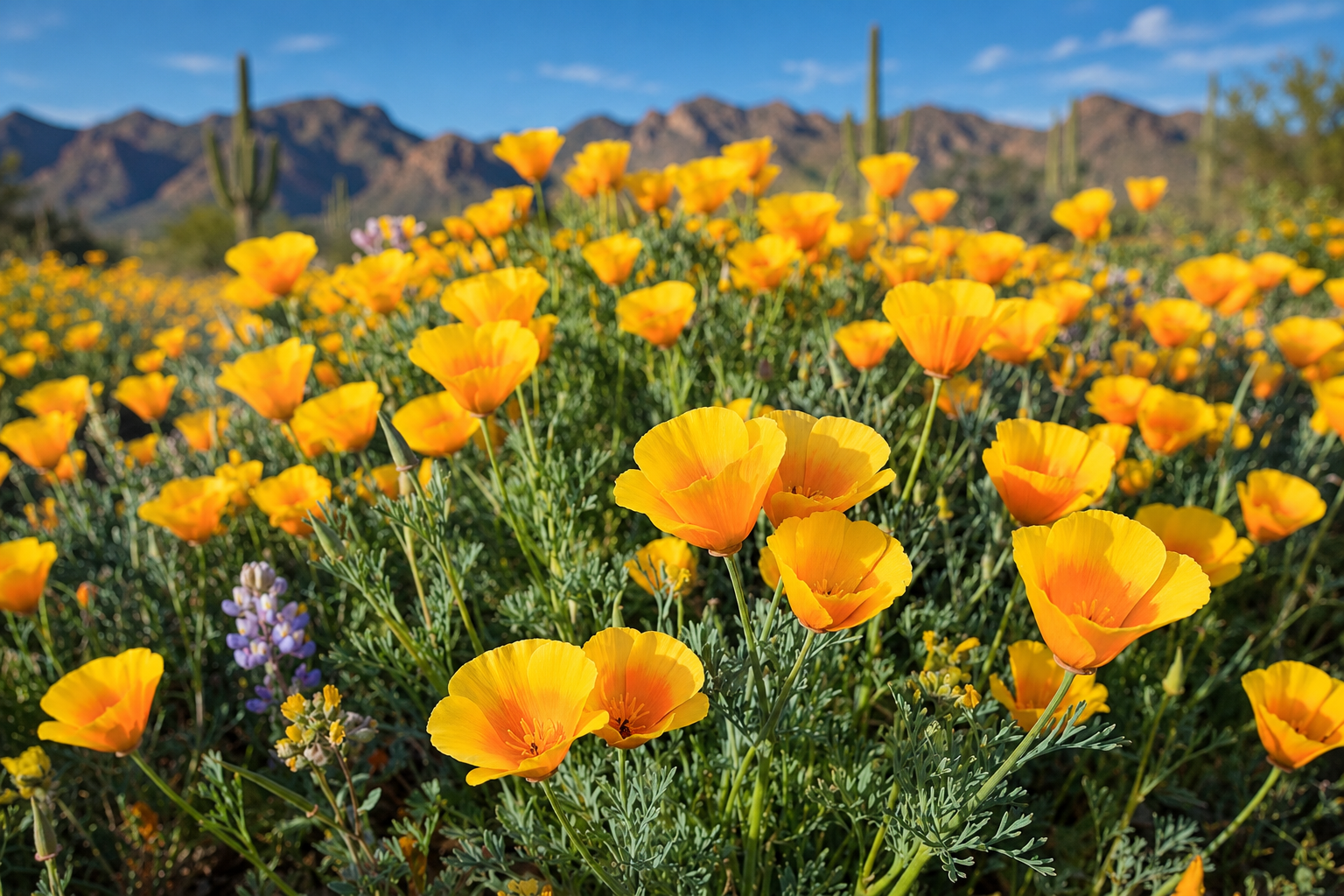
From golden poppy hillsides to monsoon blossoms, discover the vibrant colors sweeping across local trails.
Uncover the brilliant carpets of color, striking floral shapes, and stunning seasonal blooms that transform the desert floor into a living canvas.
Many first-time visitors expect the desert to be dusty brown, but Southern Arizona's native wildflowers deliver jaw-dropping explosions of vivid color following seasonal rains! Whether you are hiking local foothill trails or relaxing on the patio, here are the iconic wildflowers framing your stay:
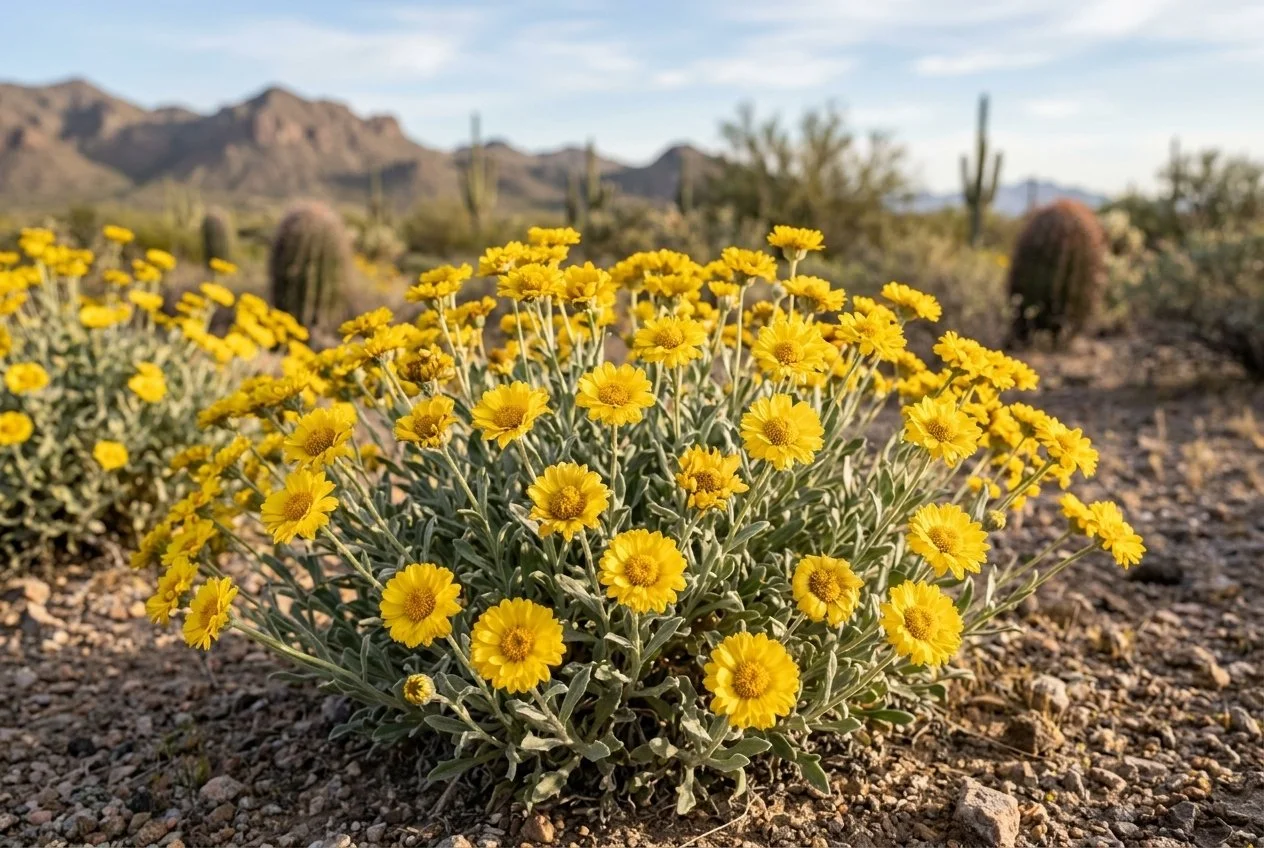
Desert Marigold (Baileya multiradiata)
Highlights: Cheerful, bright yellow daisies that bloom continuously for months, outlasting almost every other desert wildflower.
How to Spot It: Mounding plants covered in woolly, pale gray-green leaves and long stems holding bright, papery yellow flower heads that fade to a vintage cream color as they age.
The Marathon Bloomer: Unlike delicate wildflowers that vanish quickly, desert marigolds thrive through intense heat, painting roadsides and trail edges with golden yellow nearly all year round.
Textured Leaves: The silvery, felt-like coating on their foliage acts like a built-in sunshade, reflecting harsh light and locking in vital moisture.
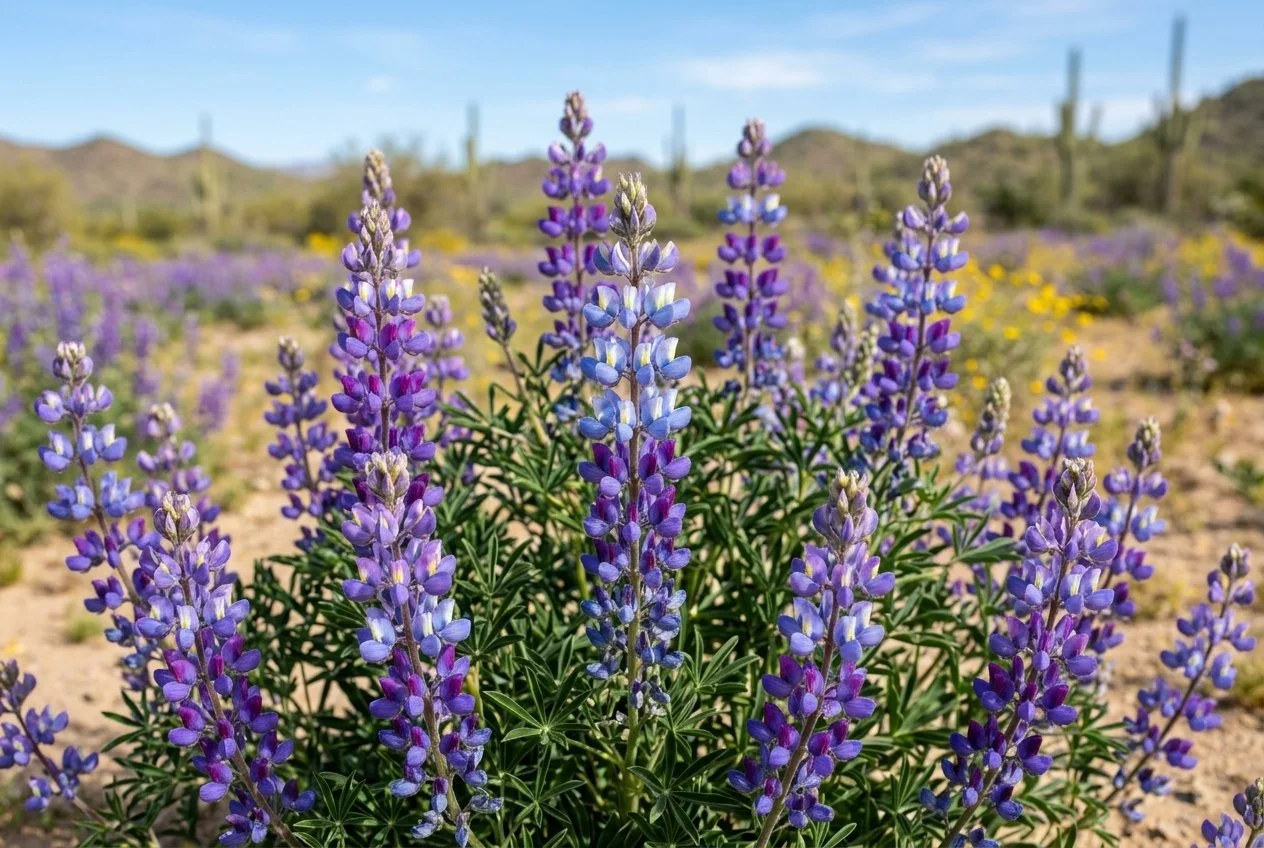
Lupine (Lupinus sparsiflorus)
Highlights: Tall, elegant spikes of rich purple and blue flowers that add cool, royal tones to the desert landscape.
How to Spot It: Slender plants featuring distinctive palm-shaped leaves and towering flower spikes tightly packed with purple, blue, and violet pea-like blossoms.
Pollinator Magnet: The distinct markings on their petals act like landing lights for native bees, signaling exactly where the nectar is hidden inside each tiny bloom.
Nitrogen Fixers: Lupines play a vital role in desert health by pulling nitrogen out of the air and pumping it back into poor, sandy soil, enriching the earth for surrounding plants.
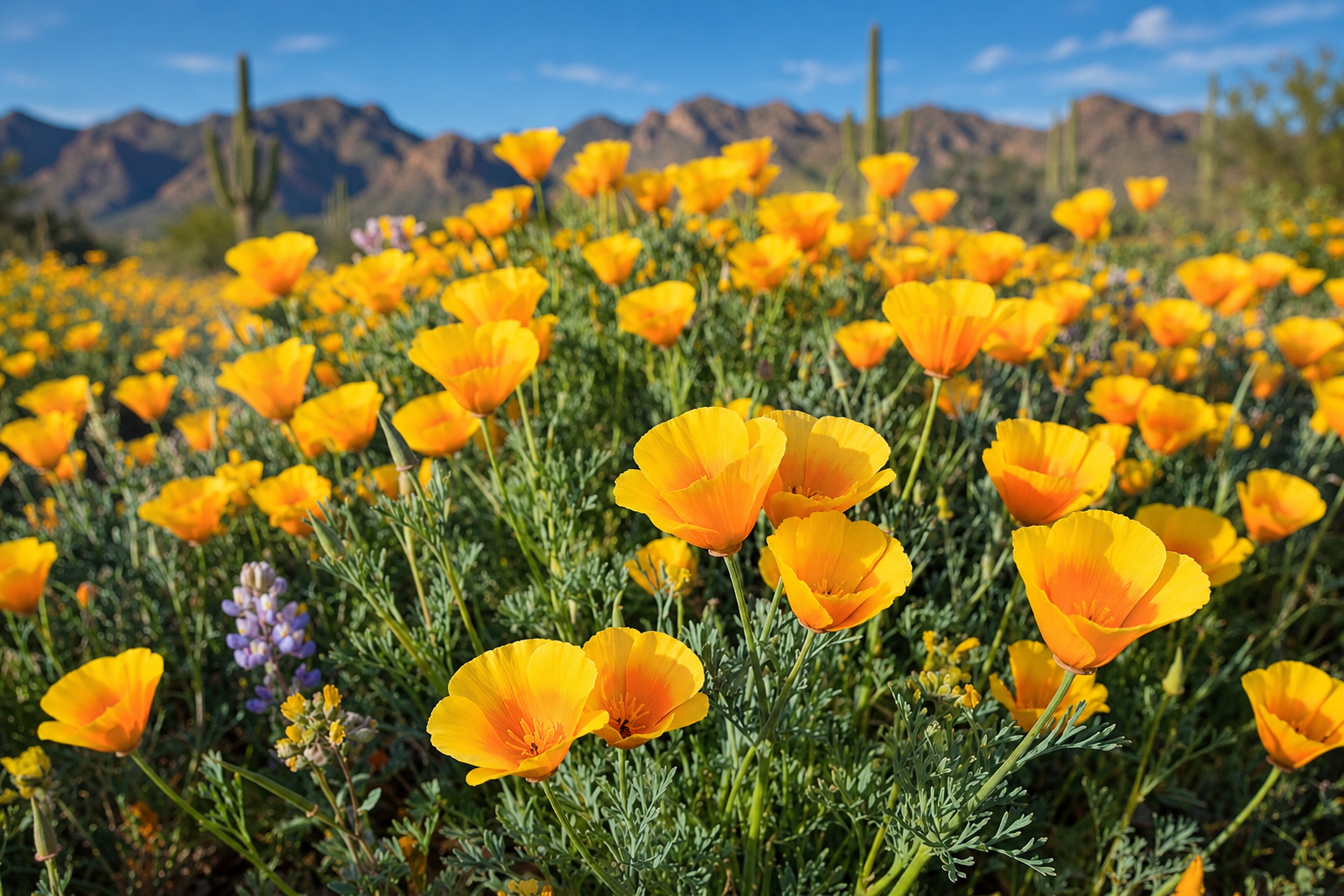
Mexican Gold Poppy (Eschscholzia californica subsp. mexicana)
Highlights: Brilliant, cup-shaped golden-orange blossoms native specifically to Southwestern desert slopes and gravelly plains.
How to Spot It: Low-growing plants with delicate, lace-like blue-green foliage topped with bright four-petaled golden-yellow or deep orange flowers.
Sun Chasers: These cheerful poppies are solar-powered. They open up wide to catch warm desert sunlight and close tight on cloudy days or when evening arrives.
Mass Displays: When winter rains align just right, millions of desert poppies bloom simultaneously across Southern Arizona foothills, creating legendary scenic photo opportunities.
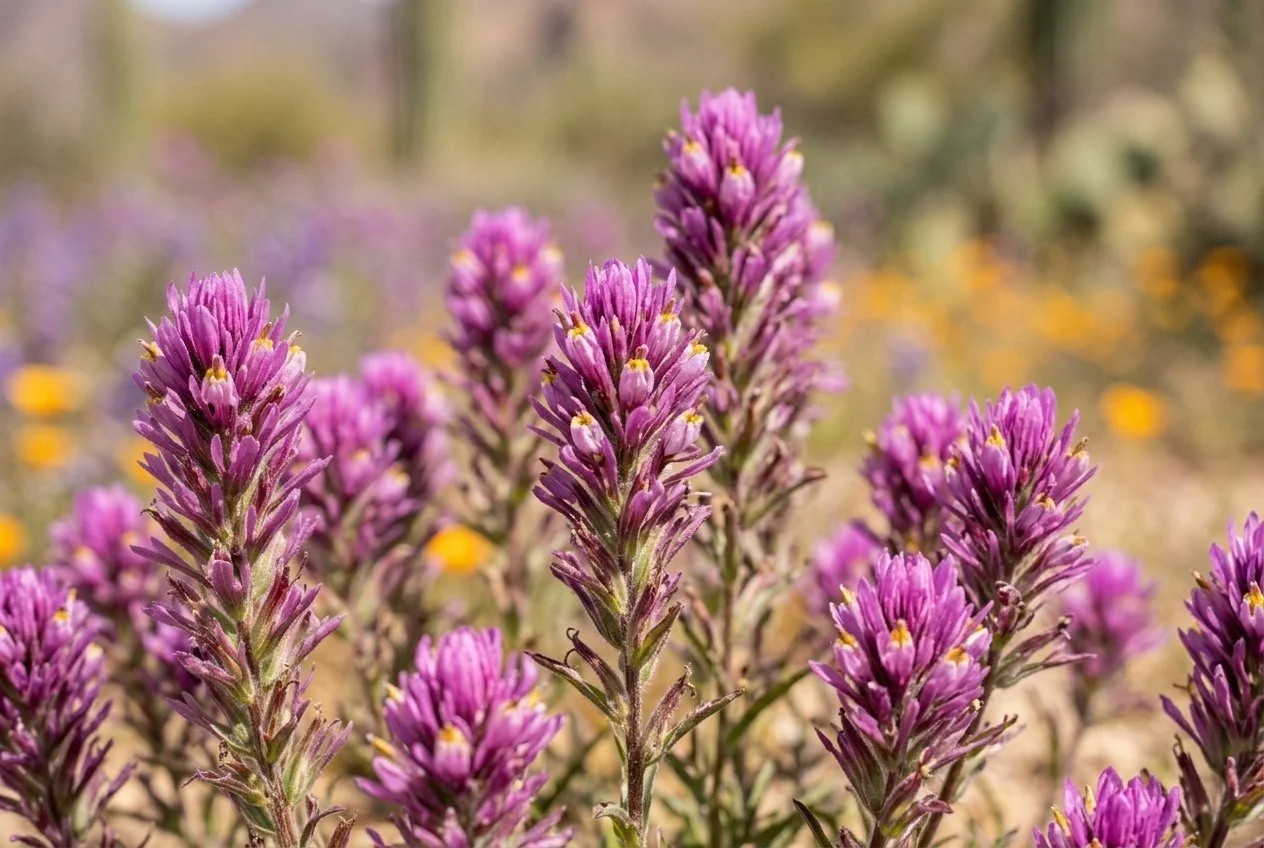
Owl's Clover (Castilleja exserta)
Highlights: Striking, magenta-tipped flower spikes that look like miniature, brightly colored paintbrushes rising from the grass.
How to Spot It: Low plants with finely divided leaves topped by dense, fuzzy flower clusters featuring vibrant, hot-pink or purplish-red tips.
Clever Parasite: While they have green leaves and make their own food via photosynthesis, Owl's Clover roots also tap directly into the root systems of neighboring wildflowers to steal extra water and nutrients.
Carpet of Pink: They frequently grow right alongside golden poppies and yellow brittlebushes, creating breathtaking natural fields of contrasting magenta and gold.
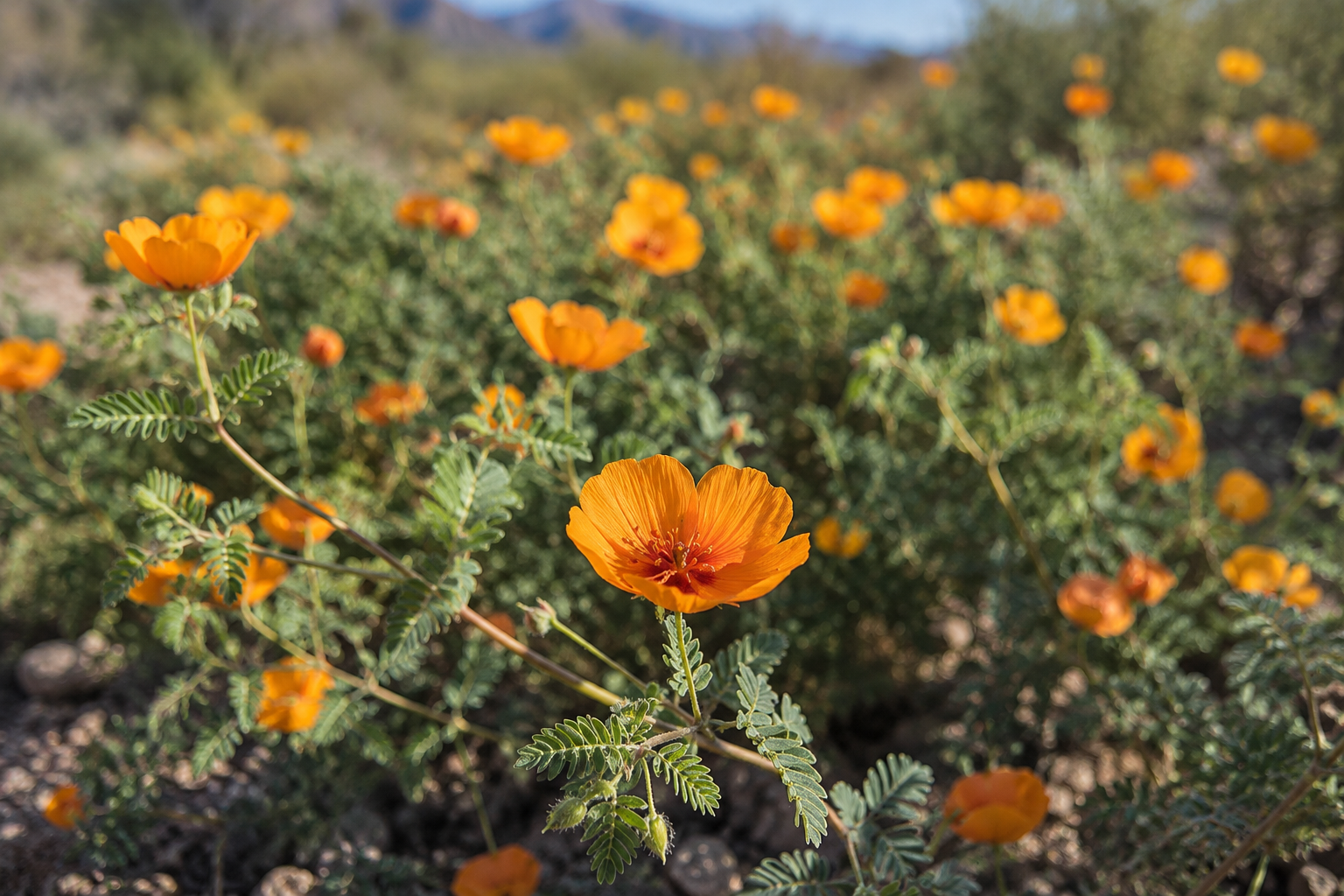
Arizona Poppy (Kallstroemia grandiflora)
Highlights: Large, blazing orange cup-shaped blossoms that pop up in massive numbers following summer monsoon rains.
How to Spot It: Sprawling green ground-cover plants decorated with vibrant five-petaled flowers boasting deep reddish-orange centers.
Monsoon Magic: While most wildflowers wait for winter, Arizona Poppies are famous summer stars that germinate, grow, and burst into brilliant orange fields just days after heavy monsoon downpours.
Short and Sweet: Their seeds can lie dormant in dry desert dirt for years, waiting patiently for the exact right rainstorm to trigger a synchronized explosion of color across the landscape.
Tips for Wildflower Spotting
Nature's Timing: Peak spring wildflower viewing generally runs from late February through April, while summer wildflower blooms kick off immediately following July monsoon rains.
Where to Look: Keep your eyes peeled along open trail edges, sandy washes, and sunny foothill slopes where wildflower seeds collect naturally.