
UNCOVER THE SECRET AROMA OF DESERT RAIN, RICH BOTANICAL TEXTURES, AND NATIVE BUSHES THAT BRING OUR LANDSCAPE TO LIFE.
Many first-time visitors expect the desert to be dusty and dry, but Southern Arizona's native shrubs bring incredible evergreen foliage, unique textures, and unforgettable regional scents to the landscape!
Here are the essential native bushes that frame our desert hills and fill the air with iconic desert aromas:
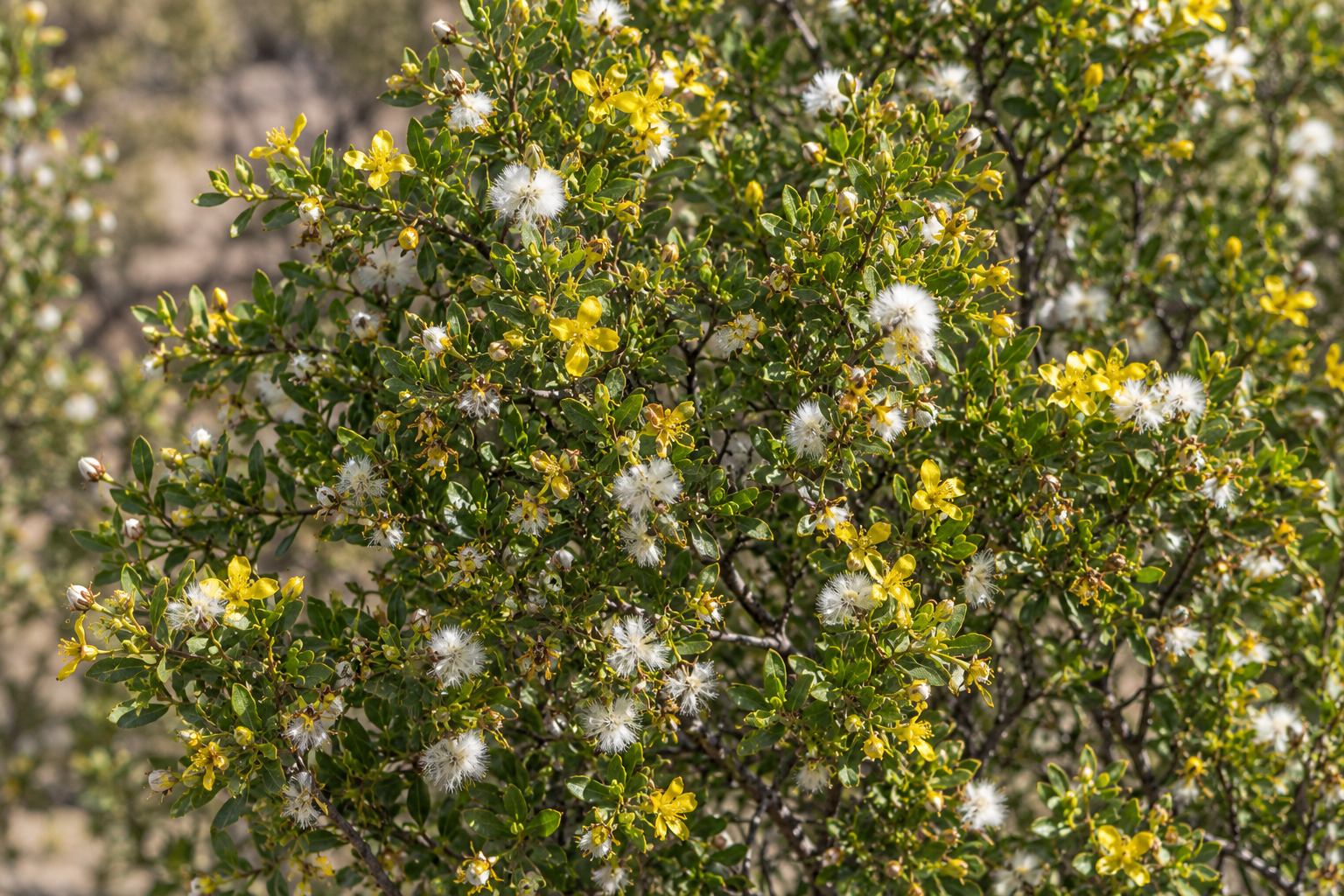
Creosote Bush
Highlights: The world-famous source of the crisp, intoxicating scent that fills the air whenever rain hits the dry desert.
How to Spot It: Medium-sized evergreen shrubs featuring tiny, resin-coated dark-green leaves paired with delicate five-petaled yellow flowers and fluffy white seed balls.
The Scent of Desert Rain: When rain hits creosote leaves, they release aromatic oils that create the signature, earthy aroma known as petrichor—the quintessential scent of Arizona! Rich in natural antioxidants and antimicrobial compounds, local Sonoran makers infuse these harvested leaves into soothing salves, bath salts, and body oils so you can take that iconic fragrance home.
Jojoba
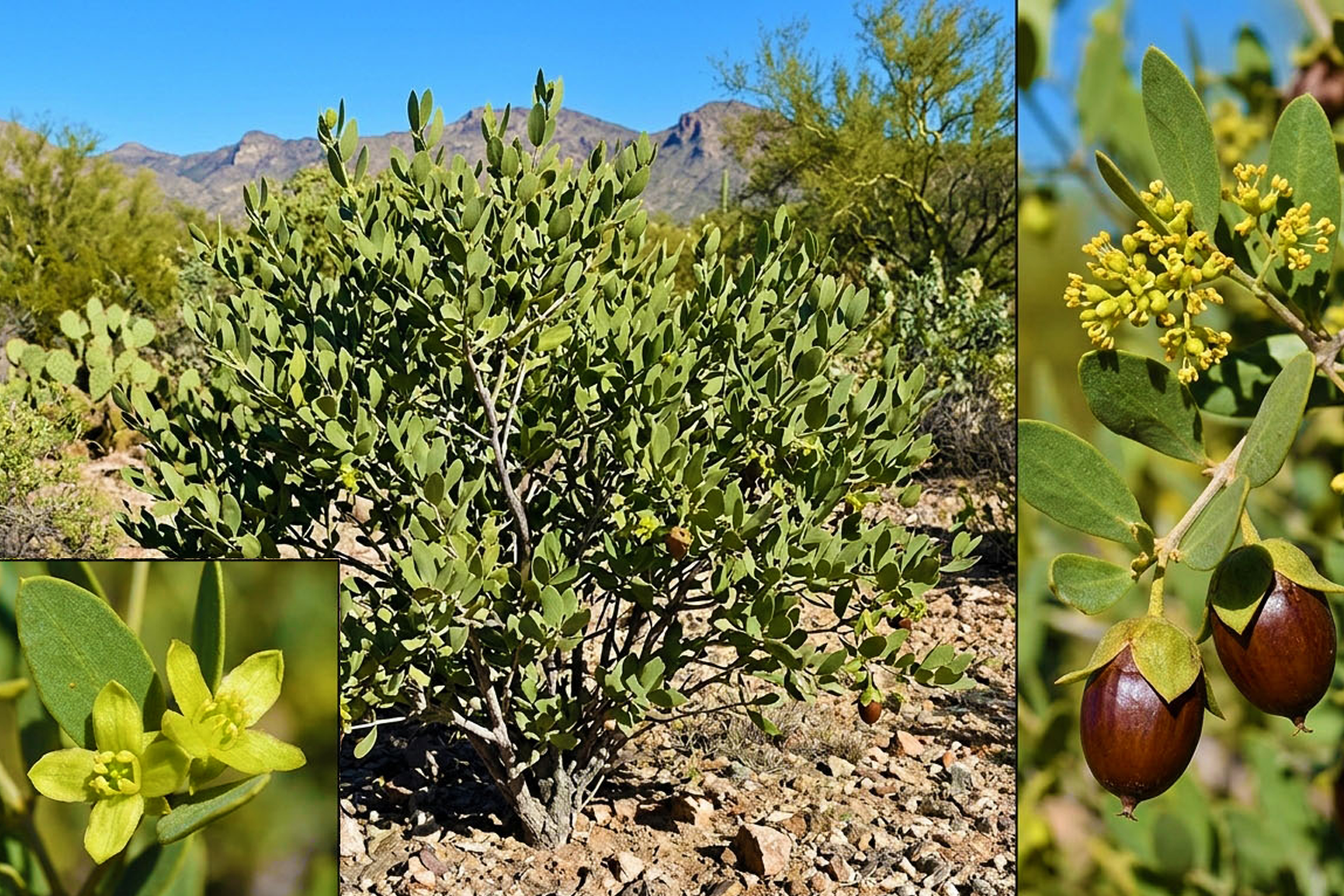
Highlights: Wild native bushes renowned worldwide for producing rich, liquid wax prized as one of nature's ultimate skin moisturizers.
How to Spot It: Dense, leathery evergreen bushes with smooth, gray-green oval leaves that stand straight up to minimize direct sun exposure.
Liquid Gold & Local Craft: The nuts of female Jojoba plants yield a pure liquid wax that mimics skin’s natural oils to effortlessly hydrate hair, face, and body. Local Sonoran artisans cold-press these native nuts into pure facial oils, lip balms, and soaps, making it a perfect local souvenir to pick up at Tucson farmers' markets and boutiques!
Globe Mallow
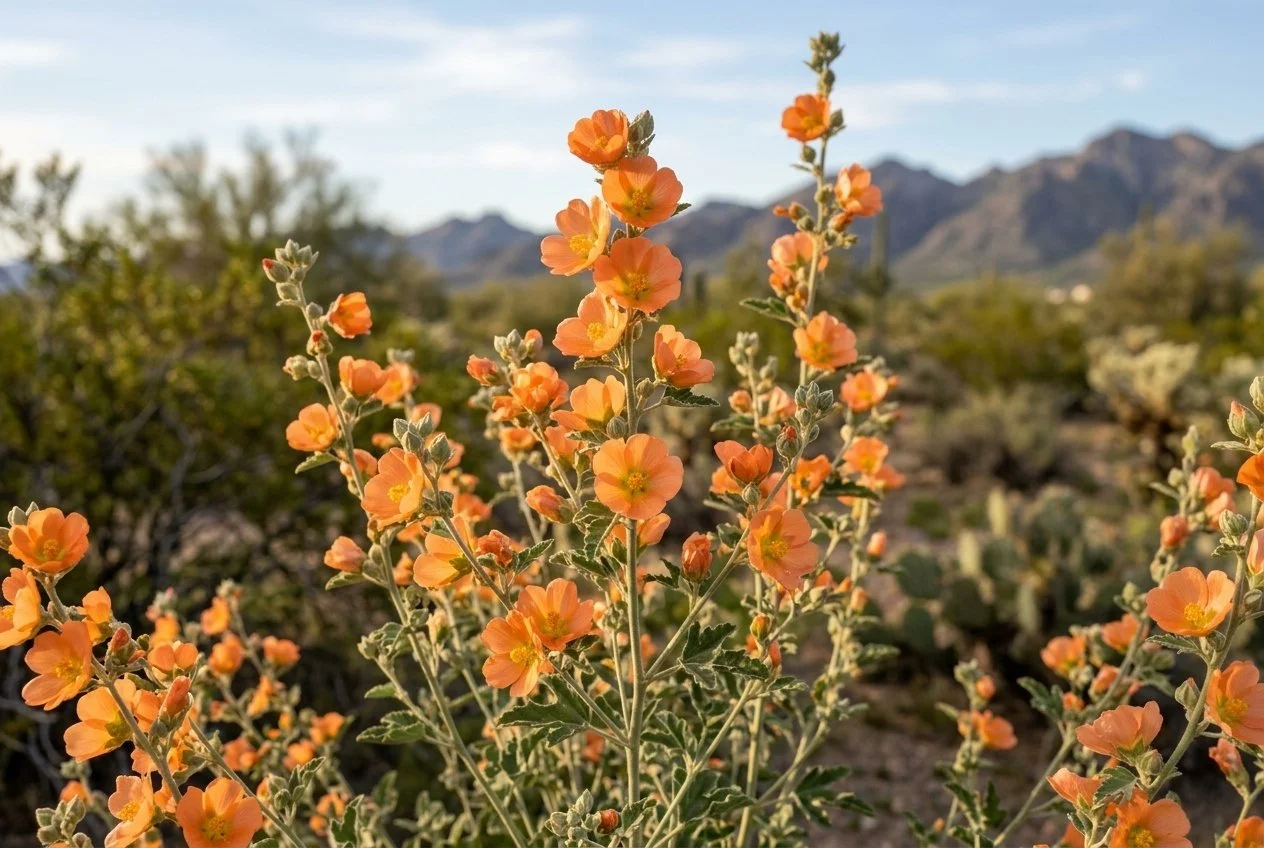
Highlights: A prolific, sun-loving trailside shrub covered in delicate, cup-shaped blossoms in brilliant shades of apricot, coral, and magenta.
How to Spot It: Rounded, loose shrubs reaching two to four feet high with fuzzy, heart-shaped gray-green leaves and wand-like stems packed with papery blooms.
Desert Pops of Color: Often seen lining paved roads and desert hiking trails, Globe Mallow erupts in mass blooms following winter rains, creating striking contrast against dark basalt rocks and saguaros.
Wildlife Favorite: The bowl-shaped blossoms act as natural warmth reflectors, making them a primary early-season feeding station for native desert bees, butterflies, and hungry hummingbirds.
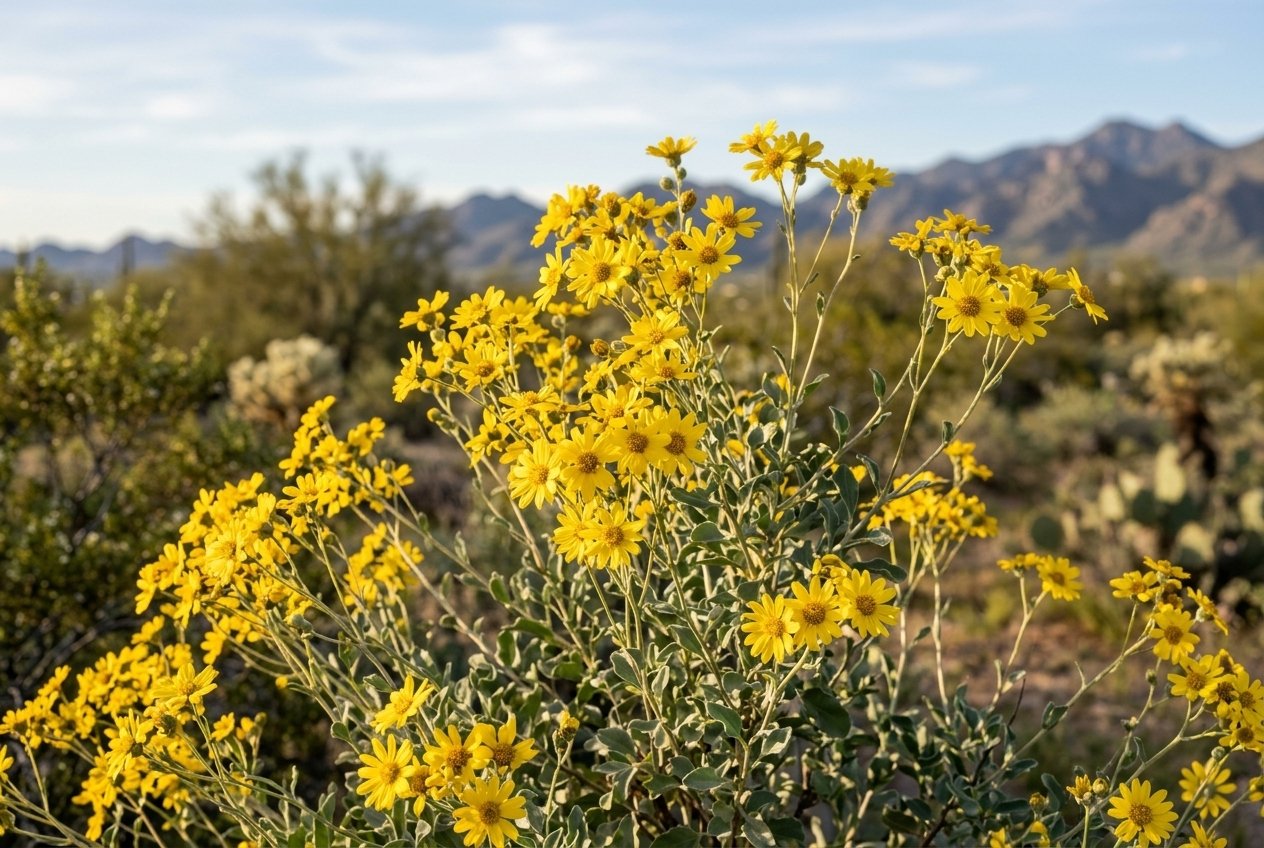
Brittlebush
Highlights: Luminous, silvery-gray bushes that transform whole mountain foothills into glowing oceans of bright yellow blossoms every spring.
How to Spot It: Mounding bushes with broad, velvety white-gray leaves topped with long, leafless stems holding classic daisy-like yellow flowers.
Sunscreen Strategy: The white, velvety hairs covering Brittlebush leaves are not just for looks, they reflect intense desert sunlight and trap moisture, keeping the plant cool during blistering summer months.
Aromatic Pioneer: Historically, early Spanish padres and indigenous tribes collected the fragrant, hardened sap that drips from brittlebush stems to burn as aromatic incense in traditional ceremonies.
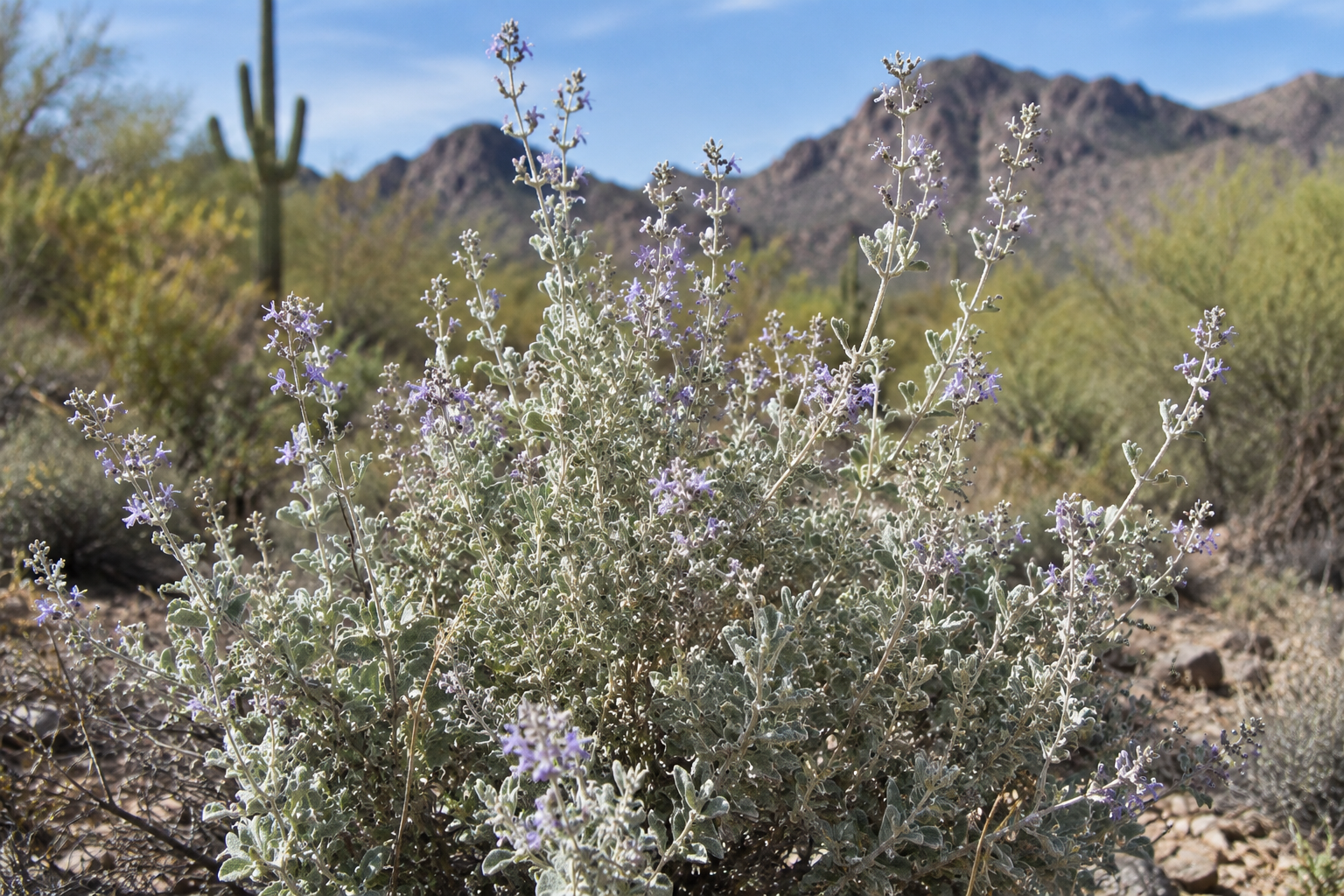
Desert Lavender
Highlights: A native desert shrub renowned for its intensely sweet, herbal fragrance that fills the air along rocky washes and foothill trails.
How to Spot It: Medium-to-tall shrubs with velvety, silvery-gray leaves and delicate spikes of violet-purple blossoms that bloom from spring into fall.
Aromatic Foliage: The fuzzy leaves hold rich essential oils that release a bold, resinous scent, blending classic lavender with warm, wild sage when gently crushed or warmed by the sun.
Local Heritage: Traditionally used by Indigenous tribes and herbalists for soothing teas, salves, and remedies.
Fairy Duster
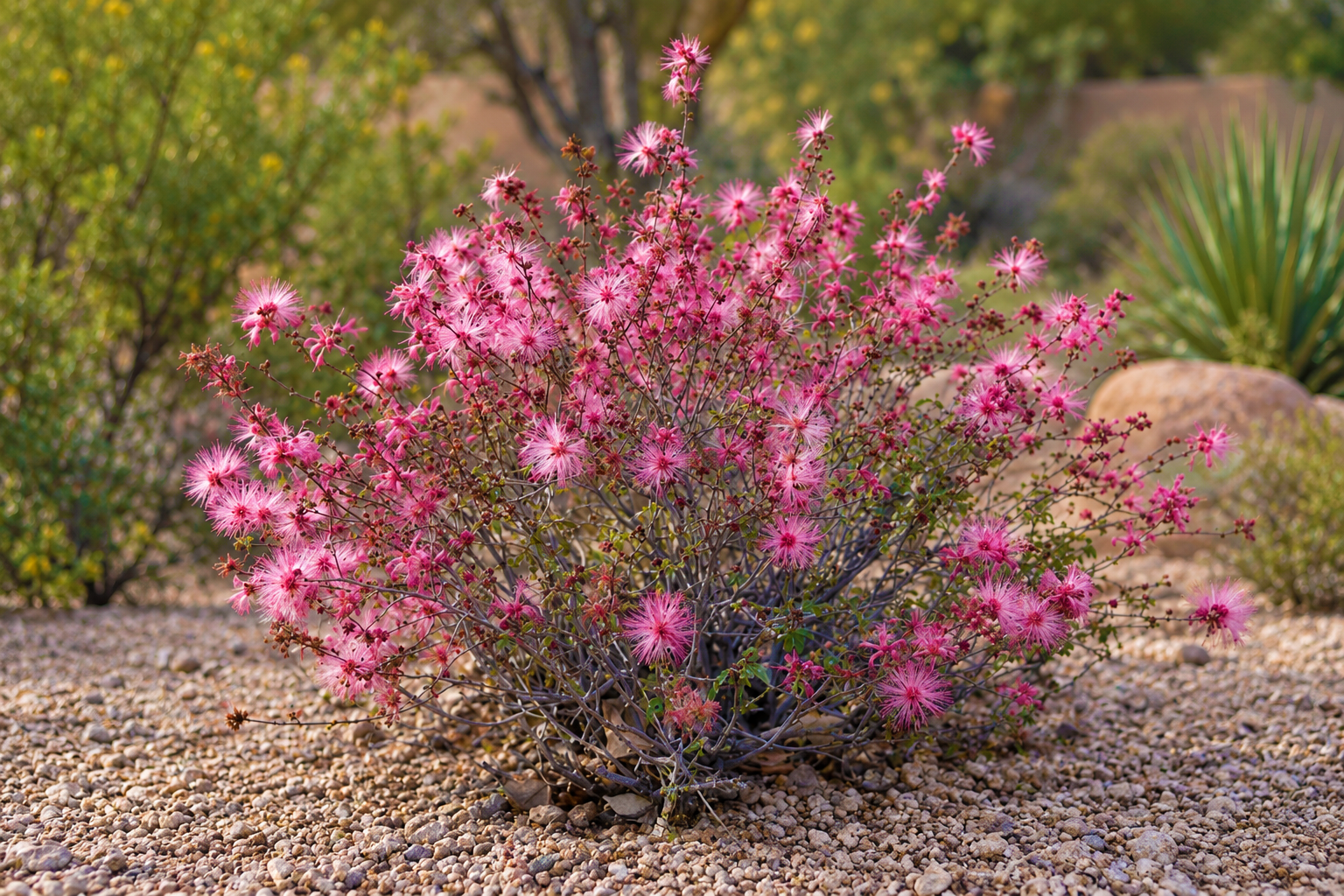
Highlights: A charming low-growing shrub featuring ultra-soft, crimson-and-pink powder-puff blossoms that look like miniature fireworks.
How to Spot It: Low, delicate bushes with fine, fern-like leaves and fluffy, tassel-shaped flower clusters bursting with thread-like pink stamens.
Hummingbird Haven: These soft, feather-like blooms produce rich nectar right at dawn, making Fairy Duster one of the top spots to catch wild Costa’s and Anna’s hummingbirds feeding early in the morning.
Tough as Nails: Don't let its delicate appearance fool you, Fairy Duster thrives on rocky slope ledges and exposed gravel with almost zero water once established.
Tips for Wildflower & Bloom Spotting
Nature's Timing: Bloom intensity varies year to year based on winter rainfall! Peak wildflower viewing typically runs from late February through April.
Spring vs. Monsoon: Spring brings golden poppies, brittlebush, and lupine, while late-summer monsoon rains (July–September) trigger dramatic night-blooming cereus and lush green spurts.